For taping, you've got two common choices: paper tape and fiberglass mesh. Paper tape is strong and cheap, and it's my default for flat seams and corners when I'm embedding it in a thin coat of compound. A roll like USG Sheetrock paper joint tape (2-1/16 in. × 250 ft.) was listed at $6.59 online in July 2026.
Mesh tape is convenient for quick patches because it sticks to the wall and helps bridge small gaps; an example is FibaTape Perfect Finish self-adhesive mesh tape (1-7/8 in. × 180 ft.), listed at $6.93 online. Mesh can be a lifesaver on small patches, but it can also telegraph through paint if the finish coats aren't wide and smooth enough—so don't skimp on feathering.
The compound you choose determines how fast you can work and how much sanding you'll do. Premixed all-purpose joint compound is the all-around workhorse, especially for embedding tape and building coats. A 4.5-gallon tub of USG Sheetrock ultralightweight ready-mixed joint compound was listed at $24.09 online in July 2026.
For deeper fills, setting-type compound (the powder you mix) hardens chemically and can speed up the job, but it also tightens up quickly—great if you've got a steady hand, frustrating if you're still learning. Either way, thin coats are the whole game. If you can see distinct edges where the knife stopped, you're leaving yourself more sanding than you need.
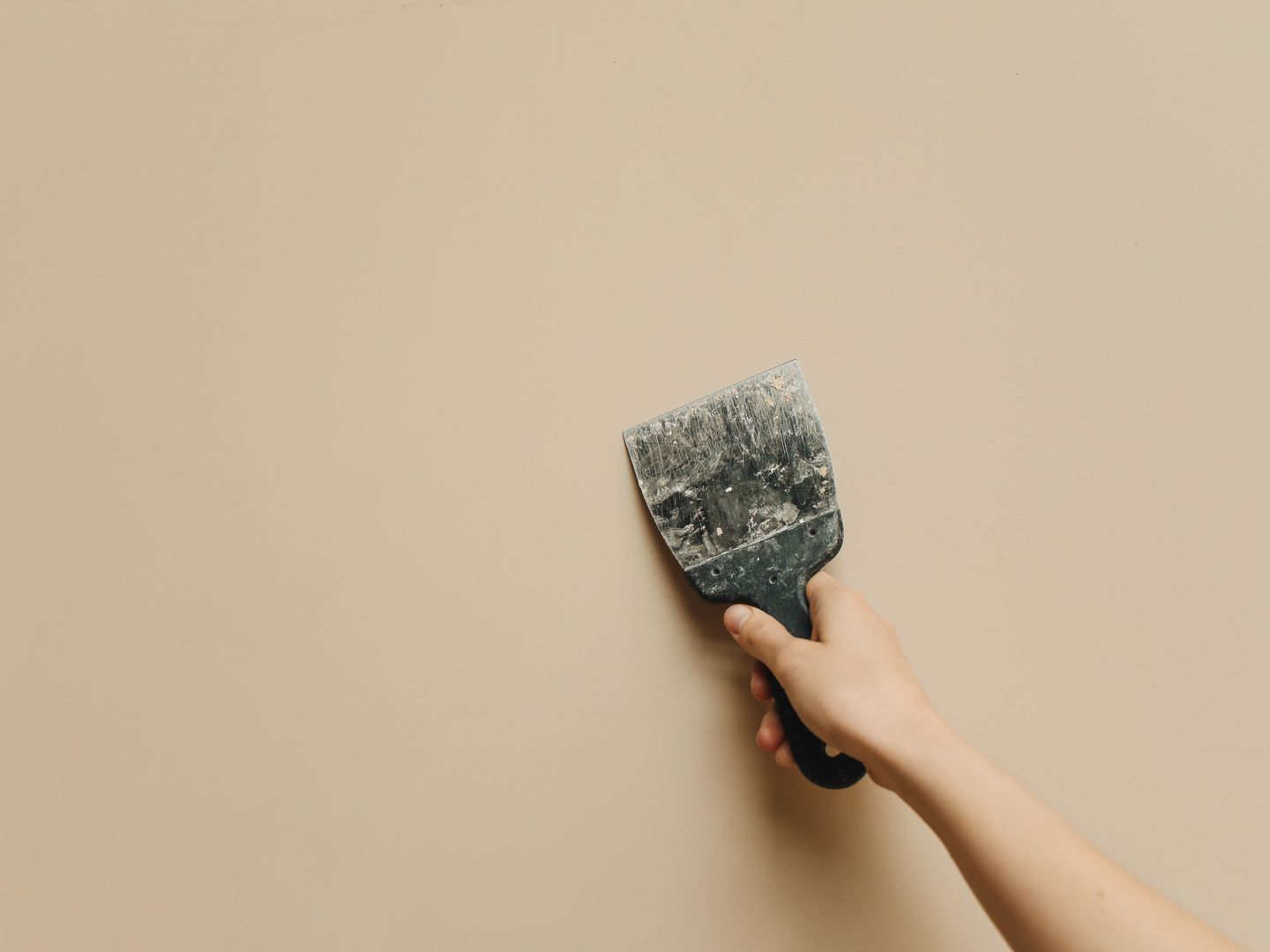
Small dents, nail holes, and tiny dings are where a lot of people overcomplicate things. If the paper isn't torn, you can often use a fast-drying spackling compound that's meant for small repairs. One example that's easy to find is 3M Patch Plus Primer (8 fl. oz.), which was listed at $7.82 online as of July 2026. The built-in priming helps on quick touch-ups, but don't treat it like a magic wand—if the wall has a glossy sheen or strong side lighting, you still want a proper primer-and-paint blend to make the repair truly disappear.